
What South Florida’s Rainy Season Really Does to Your Home
If you have lived in South Florida through more than one rainy season, you already know it is not just rain. It is weeks of standing water, humidity that never lets up, and homes that take a beating they were never really built to handle. Every year, from June through October, we get the same calls. A ceiling stain that would not go away. A wall that feels soft. A smell that showed up after the last big storm and never left.
Here is what most homeowners do not realize until it is too late: the damage rain does to your home rarely stays where it started.
Why South Florida Homes Take the Hit Harder
South Florida is a tough place for a house. Between the humidity, the flat terrain that slows drainage, and a hurricane season that overlaps almost perfectly with the rainy season, water finds its way in more than most homeowners expect. Older homes in Broward, Miami-Dade, and Palm Beach County often have drainage that was designed decades ago, before the kind of rainfall we see now.
Add in the humidity, and you have the perfect environment for water damage to spread fast. Drywall soaks it up like a sponge. Wood swells and warps. And mold does not wait around, it can start growing within 24 to 48 hours of a wall staying wet.
The Damage You Can See, and the Damage You Cannot
Some signs of water damage are obvious. A water stain on the ceiling. Paint bubbling on a wall. A musty smell in a room that never used to have one. Baseboards that look swollen or discolored.
But a lot of the real damage happens where you cannot see it. Behind that drywall, moisture can sit against wood framing for weeks, weakening it slowly. Insulation can stay wet long after the surface looks dry, holding moisture against your walls like a sponge. And mold can grow inside a wall cavity for a long time before it ever shows up on the surface.
That is the part that costs people the most. Not the visible stain, but everything growing behind it that nobody was looking at.
What Happens If You Wait
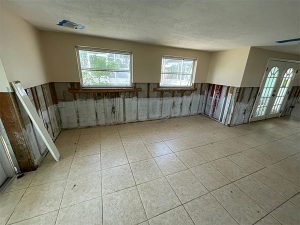
We have walked into more than one South Florida home where a small water stain from months ago had turned into a full section of rotted drywall, damaged framing, and mold that had spread into the insulation. What could have been a simple drywall repair became a much bigger project, and a much bigger bill.
Water damage does not stay the same size. It spreads, it grows, and every week you wait adds to the cost of fixing it right.
What To Do the Moment You Notice Water Damage
- Stop the source first. If it is an active leak or flooding, address the source of the water before anything else.
- Take photos right away. Document the damage as soon as you see it, this matters for insurance claims.
- Do not just paint over a stain. Painting over water damage hides the problem, it does not fix it.
- Call a licensed team to assess it, not just patch it. A real assessment checks what is happening behind the wall, not just what you can see.
How The Trusty Handyman Repairs Water Damage the Right Way
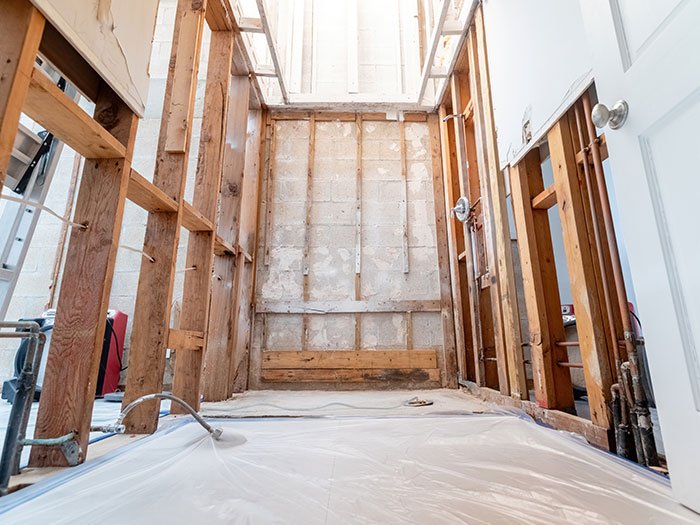
When we get called out for water damage, we do not just replace the section you can see. We open up the affected area, check the framing underneath, and make sure there is no moisture or mold hiding where it should not be. If drywall needs to come out, it comes out completely, not just the visibly damaged part. If framing was compromised, we address that too, not just patch around it.
Then we rebuild it right. New drywall, properly finished and matched to the rest of your wall, so the repair actually disappears into your home instead of looking like a patch job.
We have handled this kind of repair across homes and businesses in Broward, Miami-Dade, and Palm Beach County, from a single damaged wall to full room reconstructions after major flooding.
Frequently Asked Questions
How do I know if my drywall has water damage?
Look for discoloration, a soft or spongy feel when you press on it, bubbling paint, or a musty smell. If a wall has been exposed to standing water or a leak, even if it looks dry now, it is worth having it checked.
Does homeowner’s insurance cover rainy season flood damage?
It depends on your policy and the source of the water. Sudden events like a burst pipe are often covered, while gradual flooding may fall under separate flood insurance. We recommend documenting the damage with photos right away and checking with your insurance provider.
How long does water damage repair take?
It depends on how extensive the damage is. A single wall section can often be repaired in a day or two. Larger areas with structural damage or mold remediation needed can take longer. We will give you a clear estimate after assessing the damage in person.
Can mold come back after a repair?
Not if the source of the moisture is fully addressed and the affected materials are properly removed and dried out. That is exactly why we check behind the wall, not just the surface.
If your home took a hit this rainy season and you are seeing stains, soft spots, or a smell that will not go away, do not wait for it to get worse. Send us a message or call The Trusty Handyman for a free assessment. We are licensed, insured, and we have been fixing South Florida homes for 15 years. It’s all about trust.